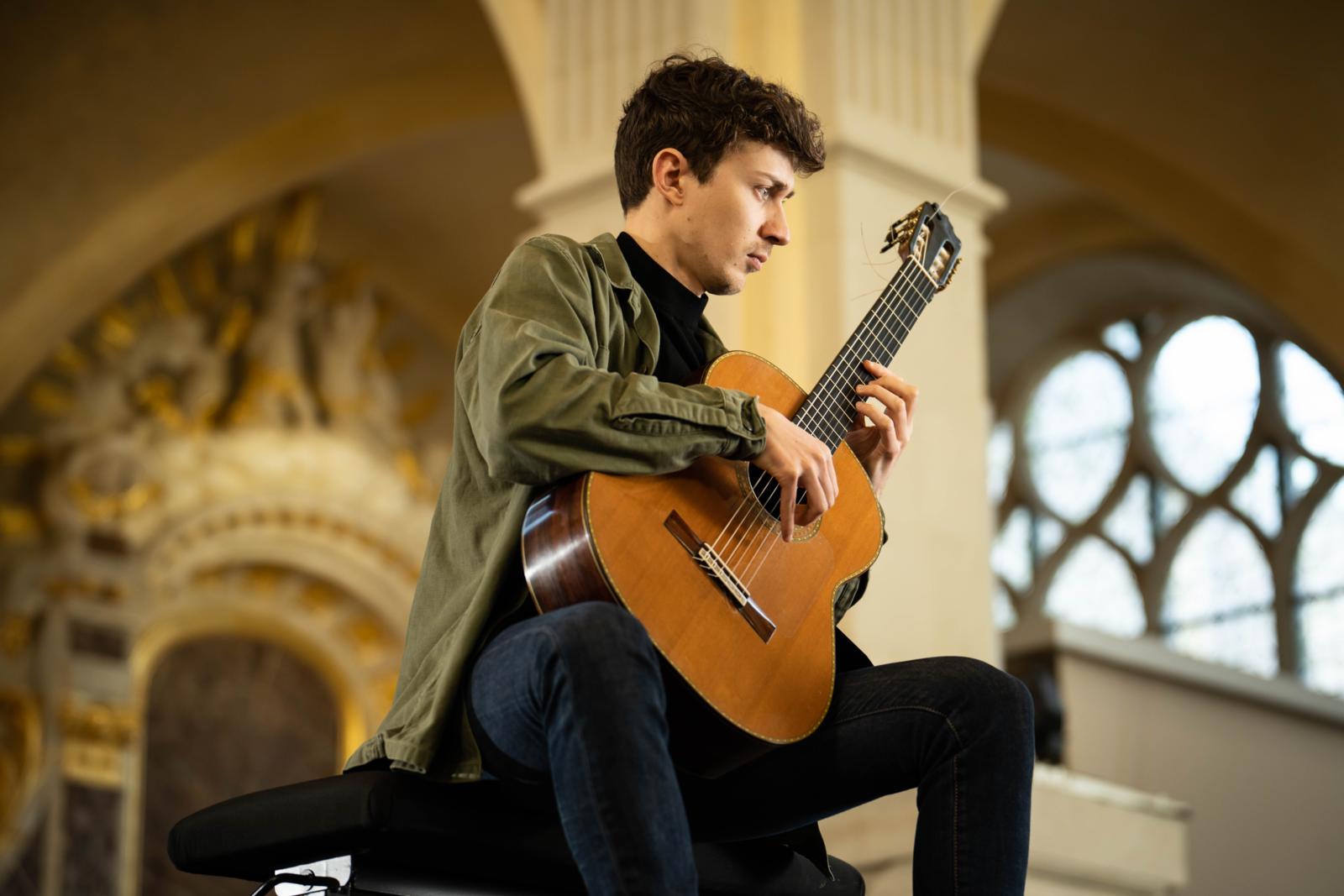
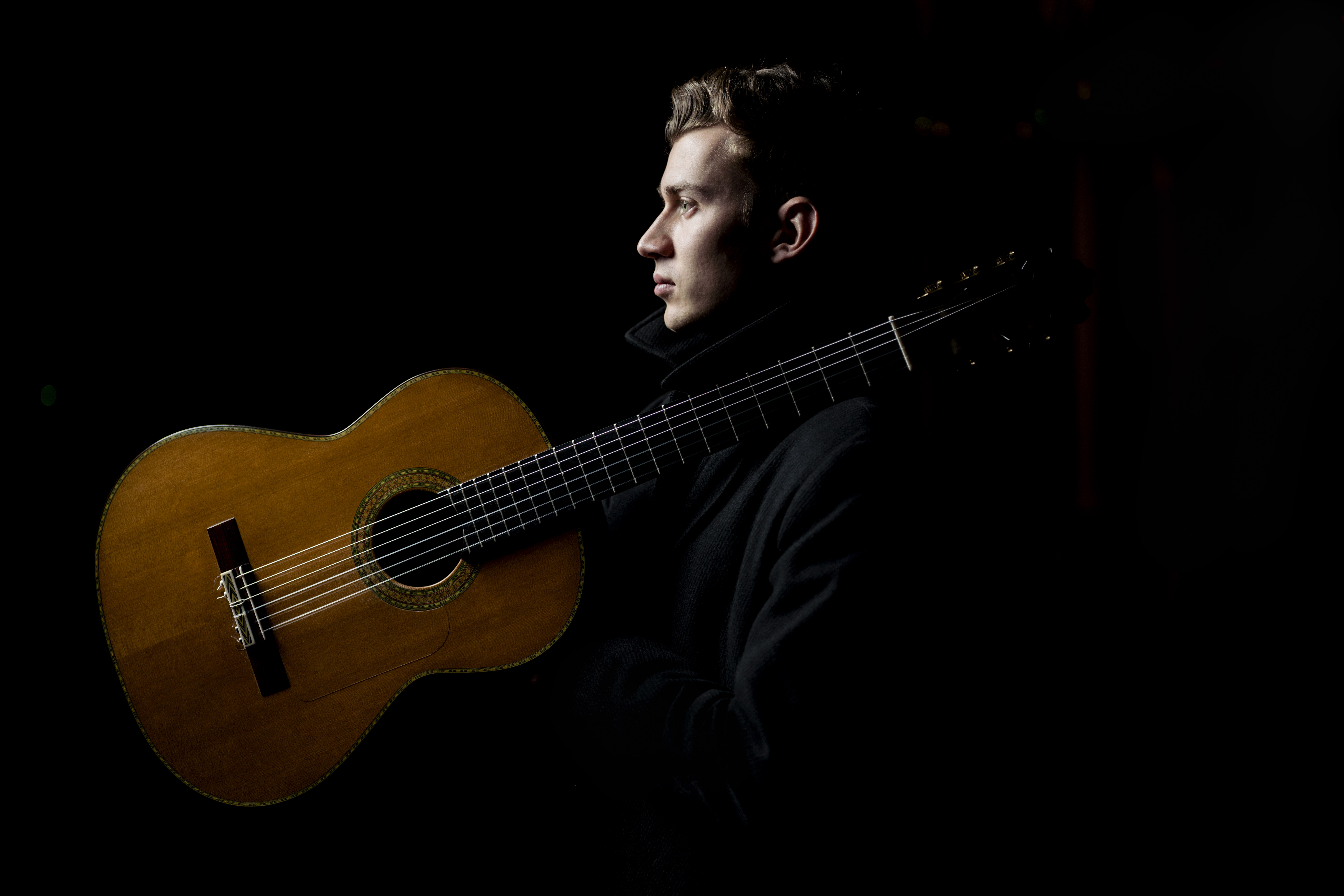
In combining Joaquìn Rodrigo’s Concierto de Aranjuez with a concertante work by an adoptive Frenchman, Alexandre Tansman, guitarist Thibaut Garcia is making something of a personal statement: he is French – and the recording was made in his birthplace, Toulouse – but his heritage in Spanish. “This album pretty much sums me up,” he says, “and I think it is vital, if you want make the best possible case for a piece of music, to feel a deep connection with the culture it represents.”
In their style and spirit, both works evoke historical eras. Rodrigo’s celebrated guitar concerto, written in 1939, is named after a royal palace not far from Madrid. Aranjuez was built in the 16th century, but Rodrigo’s concerto evokes the particular elegance of the 18th century. The album’s other work for guitar and orchestra, Alexandre Tansman’s Musique de cour (Court Music), dates from 1960, but takes inspiration from the French lutenists and guitarists of the baroque era, in particular Robert de Visée; the guitar was Louis XIV’s favourite instrument and de Visée played for the Sun King at Versailles. Garcia performs with the Orchestre National du Capitole de Toulouse and the young British conductor Ben Glassberg. Completing the programme is a selection of solo works by Regino Sáinz de la Maza, the guitarist who gave the premiere of the Concierto de Aranjuez in Barcelona in 1940.
“The Concierto de Aranjuez provides a superb example of Rodrigo’s musical language, which is unique and instantly recognisable,” says Thibaut Garcia. “It is strongly influenced by Spanish folk music in its harmony, scales and its flamenco strumming or rasgueados, while bearing the composer’s personal mark in its dissonances and nobility. As far as I know, there are no direct quotations from period music in the work, but it certainly conjures up the gardens of the palace at Aranjuez. The concerto was written at a turning point in Spanish history [the end of the Spanish Civil War] and in the history of Europe as a whole [the start of World War II]. Rodrigo used to say that he could remember the exact moment in September 1938 when his friend Regino Sáinz de la Maza asked him to write a work for guitar and orchestra. That moment of calm gave rise to a beautiful piece of escapism. It’s a piece of music that feels like it’s always been part of my life. When it comes to interpreting such a famous work, it is a matter of finding a balance between what has become accepted practice – the version I grew up with was by Narciso Yepes, playing his 10-string guitar – and the need to bring something new and fresh to it. The initial challenge in playing any concerto for guitar and orchestra is balancing the sound. The conductor has to determine the intensity and shadings of the orchestra, so that the guitar can engage in a dialogue with the other instruments while asserting itself as the soloist.”
1938 was also the year that Alexandre Tansman, born in Poland in 1897, became a French citizen. He had moved to Paris as a young man and friends he made during his career as a composer, pianist and writer included Ravel, Gershwin and Charlie Chaplin. In 1941 he took refuge as a Jew in the USA, but returned to France shortly after the end of World War II. Musique de cour was one of the works that he wrote for the great Spanish guitarist Andrés Segovia (1893-1984). “Segovia and Tansman had great admiration for each other,” explains Thibaut Garcia. “It’s interesting that Tansman’s guitar music is very different from his music for other instruments. This is because Segovia wanted to play pieces that audiences would find easy to listen to. As a result, Tansman’s guitar music tends to be neoclassical in style. This work draws directly from the works of Robert de Visée. I would say that it is half an orchestration and half an original composition, which means that it juxtaposes different eras in a striking way, rather like Stravinsky’s Pulcinella or Rodrigo’s Fantasia para un gentilhombre [also a work for guitar and orchestra].
“The baroque source of Musique de cour is evident, since Tansman takes themes directly from the music of Robert de Visée, and reorchestrates them in his own imaginative way. He uses modern harmonies and more complex chords than would have been heard in de Visée’s time. In the baroque era, the ordering of the various types of dance in a suite was strongly codified, but Tansman takes a freer approach, bending some of the rules, even when it comes to the rhythmic patterns of certain dances.”
The four solo pieces by Regino Sáinz de la Maza pay tribute to Spanish folk music. One of them, Sacrificio, was written for a 1965 feature film called La frontera de Dios. It is another work that draws on an earlier era, in this case adapting a guitar piece from the 18th century, the lyrical Leçon by the Barcelona-born Fernando Sor (1778–1839).