
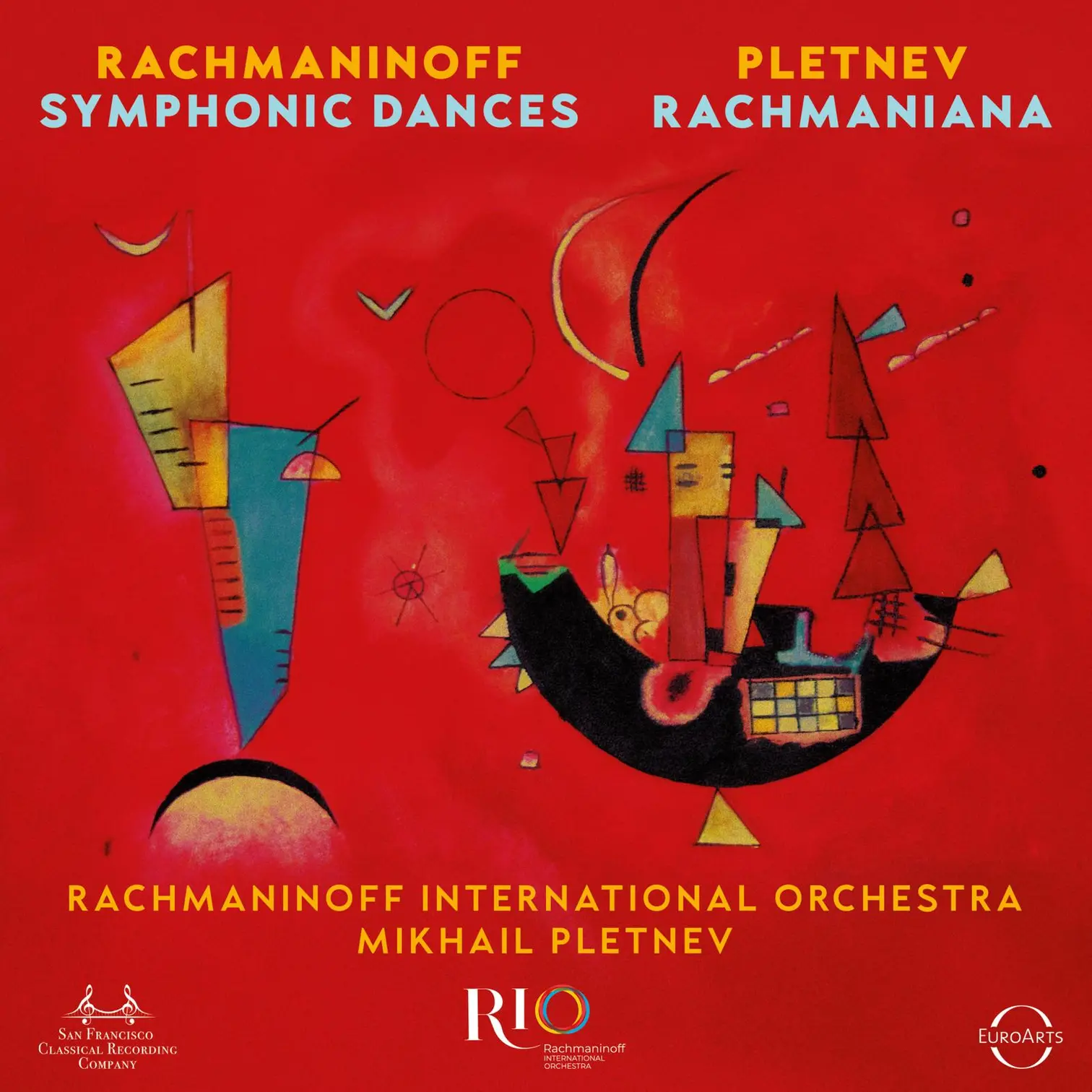
Pletnev: Rachmaniana & Rachmaninoff: Symphonic Dances
Mikhail Pletnev, Rachmaninoff International Orchestra, EuroArts
Sergei Rachmaninov, Mikhail Pletnev
Physical
Streaming
Download


Alongside Rachmaninoff’s Symphonic Dances, this release features the world premiere recording of Mikhail Pletnev’s Rachmaniana, which will be first performed in January 2026 at the Elbphilharmonie Hamburg. The eight short pieces of the Rachmaniana Suite succinctly outline some of the composer's character traits: passion, tenderness, a joie de vivre both exuberant and rooted in pain, and an all-encompassing melancholy. Pletnev captures moods without quoting directly (exceptions prove the rule). The first piece is entitled Dance, and indeed, its sometimes sharply accented alternating bass notes recall the beginning of the Symphonic Dances. They accompany a descending horn melody, which the trumpet later expands melodically. The yearning tone of the clarinet fades in subtly, concluding with flute notes that narrowly miss the Dies irae motif. A touch of irony is essential. Tchaikovsky's spirit hovers over the Nocturne, a rapturous and slow waltz. The Serenade continues in a dance-like vein: The oboe, followed by dotted chords and a powerful ascending cello, introduces a lively waltz in which the oboe theme is further developed by the English horn and bassoon. This evokes the tone of The Nutcracker or Scheherazade, yet is entirely original. Then, however, the performer Pletnev, who caused a sensation at a young age with his piano transcriptions of Tchaikovsky ballets, takes center stage: Paysage (Landscape) is a faithful orchestration of Rachmaninoff's Prelude Op. 32 No. 5, further enhanced by a delicate shimmer of strings. The sweet flute melody over gentle clarinet passages conjures up a lovely landscape, a “lost paradise”. What the pianist Pletnev understands how to bring to new life in an inimitable unity of structural insights and emotional depth also inspires him compositionally: The penultimate piece Proshchaniye (Farewell) is also an arrangement of the third piece from Rachmaninoff’s Moments musicaux op. 16, elevating its character as a “funeral march” by translating its dark piano chords into a profoundly solemn chorale for the horns. An allegretto in the colourful interplay of woodwinds and brass, to which the strings join as a third participant, also in a witty role reversal, and a “melody” that unfolds in the cellos with Tchaikovsky-like triplets, are interspersed as evocations of bygone (sonic) worlds. The virtuosic finale is a whirling Hungarian Dance, almost a “metamusic” in its ironic xylophone attacks and a reminder of both the “toy music” from Shostakovich’s Symphony No. 15 and Rachmaninoff’s third Symphonic Dance—only that it seems to lack the profound depths. This music can be called “contemporary” insofar as it was composed in our time. However, it is not entirely untouched by what has been composed since Rachmaninoff’s time, and these experiences are incorporated into it in a very subtle way. But it does not follow the path of describing the ugliness of this world. Rather, the music professes an imagination of beauty that we might find old-fashioned, yet desperately need again today. Perhaps it is simply music. In Rachmaninoff's words, that is: “A quiet, moonlit night; The rustling of leaves; Distant evening bells; That which goes from heart to heart; Love. The sister of music is poetry—its mother, melancholy.