
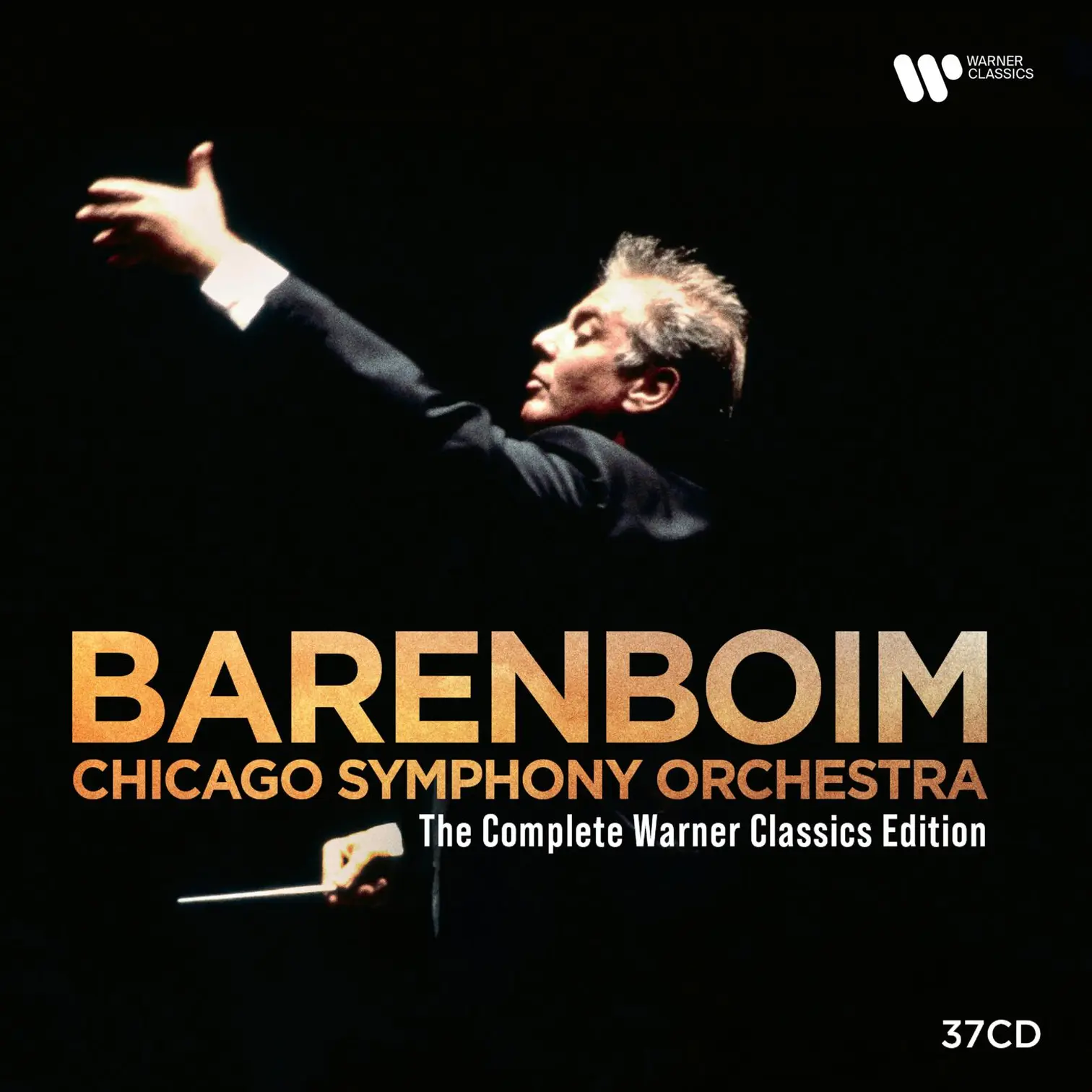
Physical


Daniel Barenboim, the conductor
Daniel Barenboim is not only one of the greatest pianists alive, but has also established himself as a leading conductor since his debut with the Philharmonia Orchestra back in 1967. He has held prominent positions with some of the world’s most illustrious ensembles, including the Chicago Symphony Orchestra, the Staatskapelle Berlin, the Orchestre de Paris, and the Orchestra del Teatro alla Scala di Milano, while also touring extensively with the Wiener Philharmoniker and his own West-Eastern Divan Orchestra.
Daniel Barenboim and the Chicago Symphony Orchestra
Daniel Barenboim’s tenure as music director of the Chicago Symphony Orchestra (CSO), spanning from 1991 to 2006, marked a period of profound intellectual and stylistic evolution. Succeeding the legendary Sir Georg Solti, Barenboim sought to transform the orchestra’s signature “brute force” and technical precision into a more flexible, German-influenced sound characterized by warmer textures and spontaneous phrasing.
A central figure in Chicago’s cultural landscape, Barenboim oversaw the 1997 opening of Symphony Center, a massive renovation of the orchestra’s home. His programming was famously ambitious, featuring over 30 world and U.S. premieres by composers such as Elliott Carter and Pierre Boulez, while maintaining a deep commitment to the core Austro-German repertoire of Bruckner and Wagner.
His leadership was often defined by his dual role as both conductor and piano soloist, frequently leading concertos from the keyboard. Though his demanding schedule and focus on European projects sometimes created friction with management, his artistic legacy remains undeniable. Upon his departure, the CSO named him Honorary Conductor for Life, cementing his status as one of the ensemble's most influential maestros.
Barenboim and the Chicago Symphony Orchestra have made many highly praised recordings together. Corigliano’s Symphony No. 1 is arguably one of the most significant recordings of his tenure; Barenboim’s live world-premiere recording winning two Grammy Awards (Best Orchestral Performance and Best Contemporary Composition). His Erato recordings of the complete Brahms Symphonies and Beethoven’s Missa solemnis are a milestone too of this era.
Barenboim is also a celebrated Wagnerian, and his Teldec discs of overtures and preludes are frequently cited as the pinnacle of the CSO’s “brass-and-silk” capabilities. These recordings showed a shift toward a more “weighted” and “sensuous” sonority compared to the leaner, more percussive style of his predecessor.
Daniel Barenboim frequently collaborated with superstars like Itzhak Perlman and Yo-Yo Ma to make outstanding albums: Brahms’ Double Concerto with both; the Mendelssohn, Prokofiev No. 2 and Stravinsky with Perlman. He also recorded the Brahms and Sibelius concertos with the then-young superstar Maxim Vengerov. Critics at the time were stunned by the electrifying chemistry between the fiery Vengerov and the more seasoned, philosophical Barenboim.